
Why Women's Intimate Health Is the Missing Pillar of Wellness
Women today take their health seriously: skincare routines, strength training, therapy, sleep tracking. One area is still almost entirely missing from that conversation, and it is the one most women find hardest to raise with anyone. Dr Amina Adeniran's September feature in London House Magazine, "Breaking the Taboo: Why Intimate Health Is the Missing Pillar of Female Wellness", argues that women's intimate health deserves the same medical seriousness as every other part of the body. This post sets out that argument, explains why intimate concerns rarely come alone, and introduces the thinking behind Dr Amina's doctor-led approach to intimate wellness.
Read Dr Amina's September feature in London House Magazine
The September feature, published in the magazine's Health & Fitness section, opened Dr Amina's three-part series. October follows with how intimate health changes in your 30s, 40s and 50s, and Dr Amina appears on the cover of the November issue.

Why intimate health is the missing pillar of women's wellness
Most women would not ignore a knee that ached for months, a change in their skin or a run of sleepless nights. Intimate symptoms are treated differently. After childbirth, through menopause or simply with age, women experience discomfort, loss of tone and knocks to their confidence, and they are routinely told, or tell themselves, that this is just what happens.
Across 15 years in medicine, working as both an NHS and a private GP, Dr Amina has seen how often women live quietly with intimate symptoms they would never accept anywhere else in the body. Her September feature calls for that narrative to be dismantled.
Why vaginal health is still treated as taboo
The reasons are familiar. Embarrassment. A sense that the symptoms are trivial, or inevitable, or simply part of being a woman. Not knowing who to ask, and short appointments that leave little room for a sensitive conversation. Many women also assume that the only options are surgical, or that nothing can be done at all. The result is that problems which are common and often very treatable go unmentioned for years.
Intimate health deserves clinical rigour, not cosmetic dismissal
Dr Amina's philosophy, as she sets it out in the feature, is that intimate wellness deserves "the same clinical rigour we expect in every other area of medicine." Modern intimate care is too often written off as cosmetic vanity. At its best, she argues, it sits where tissue health, sexual wellbeing and everyday function meet, with appearance mattering to some women as well.
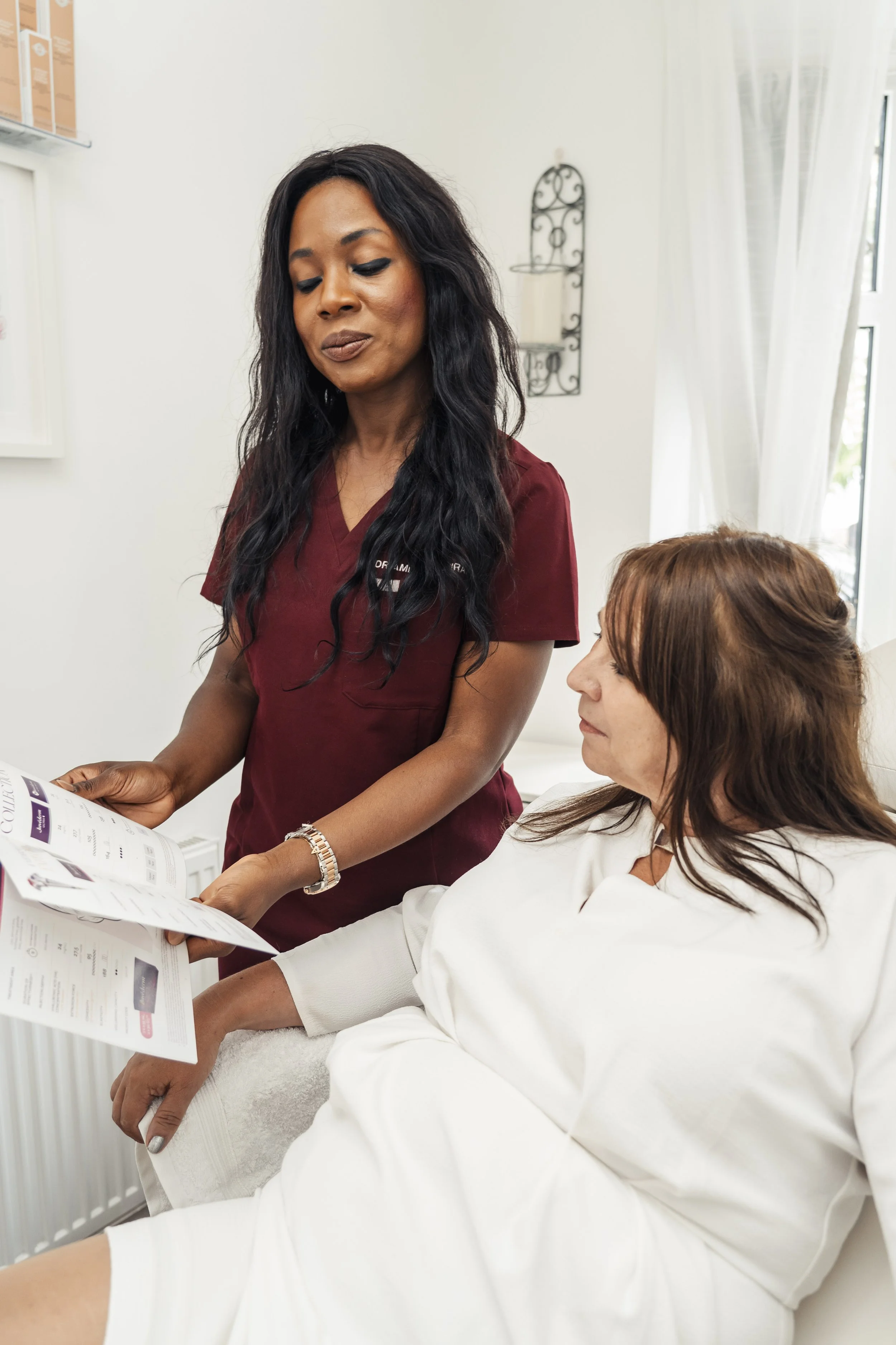
What clinical rigour looks like in practice
Taking intimate health seriously means treating it the way good medicine treats anything else:
a proper medical history and assessment before any treatment is discussed
ruling out anything that needs a different route, such as infection or symptoms that need further investigation
treatments chosen with reference to the available clinical evidence, not trends
an honest conversation about what treatment can and cannot do
care that works alongside your GP, gynaecologist or oncology team where relevant
Why intimate concerns rarely come alone
The central clinical idea in the September feature is that intimate concerns seldom exist in isolation. Changes in moisture or internal support often happen alongside reduced sensation, loss of volume or changes in intimacy. Treating one symptom without looking at the wider anatomical picture can leave important concerns unaddressed.
Consider a woman who seeks help for dryness. She may also have noticed reduced sensation but not mentioned it, assuming the two were unrelated. Treat only the dryness and she leaves with half an answer.
How that thinking became the 3-Zone Protocol®
That understanding led Dr Amina to develop the 3-Zone Protocol®: a doctor-led, multi-zone approach that uses carefully selected non-surgical treatments, guided by the available clinical evidence. Each zone addresses a different part of the picture:
Zone 1, Rehydration: restoring hydration, elasticity and internal support.
Zone 2, Renewal: supporting tissue health, sensitivity and sexual wellbeing where sensation or arousal has changed.
Zone 3, Volume & appearance: restoring contour, cushioning and comfort to the external intimate tissue, which for some women also improves confidence in how they look.
Not every woman needs every zone. The point is that all three are considered together at assessment, so nothing is missed.
Beyond physical comfort: confidence, intimacy and quality of life
Intimate symptoms rarely stay physical. Discomfort can make exercise less enjoyable, chafing can change what you wear, and pain or reduced sensation can make intimacy something to avoid rather than enjoy. Over time, many women describe simply feeling less like themselves.
This is the wider argument of Dr Amina's feature: addressing intimate health can extend well beyond physical comfort, affecting confidence, relationships and overall quality of life. That is precisely why it belongs alongside skin, fitness and mental wellbeing as a pillar of women's health, rather than as an optional extra.

From why to when: what the series covers next
September makes the case for why women's intimate health matters and why it needs a whole-picture approach. October moves from philosophy to biology. It maps what changes in each decade, from pelvic floor changes after pregnancy to perimenopause and menopause, and shows how those changes turn up in everyday moments. The November issue, with Dr Amina on the cover, continues the series.
If you'd like to start with the basics, our guide to understanding your vulva explains why knowing your own anatomy matters long before perimenopause.
Start the conversation
Dr Amina closes the feature with an invitation to open this conversation. The simplest first step is the What Zone Are You? quiz: confidential, no booking commitment, and designed to point you towards the zone most relevant to you.
Intimate health is not a luxury, a vanity or a subject to avoid. It is part of your health, and it deserves a doctor who treats it that way.
Frequently Asked Questions
-
It is part of women's health. Concerns such as dryness, leaks, pain during sex and reduced sensation affect comfort, function and quality of life, and they deserve proper medical assessment. Appearance matters to some women too, but it is one part of the picture, not the whole of it.
-
Intimate symptoms can have more than one cause, and some need investigating before any treatment is considered. A doctor can take a full medical history, examine you, rule out conditions that need a different route, and coordinate with your other care. At Dr Amina's clinics, every consultation and treatment is led by a GMC-registered GP.
-
The 3-Zone Protocol® is Dr Amina's doctor-led, non-surgical approach to intimate health. It looks at three connected areas: internal moisture and support, sensation and sexual wellbeing, and external volume and comfort. Treatment is planned across the zones you need, in a sequence tailored to you.
-
No. Many women need only one or two zones. All three are considered at your assessment so that nothing is overlooked, but your plan is built around your own symptoms and goals.
A private word with Dr Amina
Confidential, unrushed consultations at Harley Street and Bromley, led personally by Dr Amina Adeniran.
